Responsibility from day one
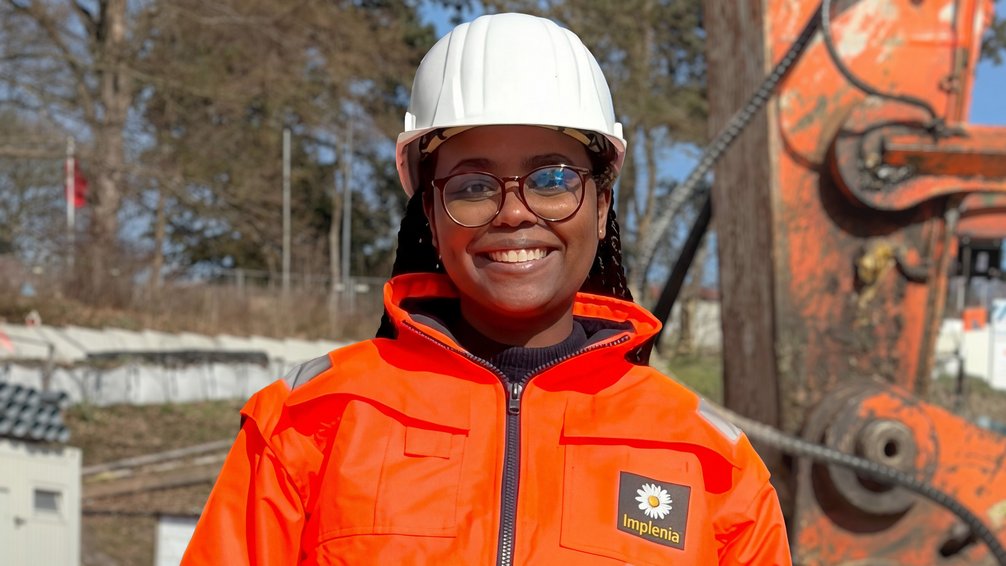
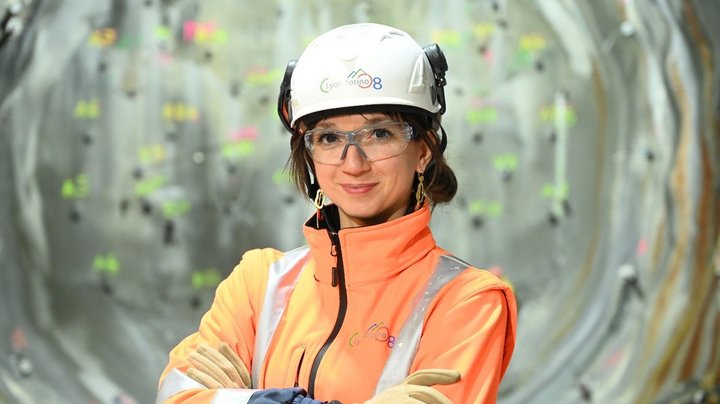
Makda, you've been a project manager at Implenia's district heating project in Hamburg since last November. What exactly is your area of responsibility?
I deal with everything that has to do with the Hamburg district heating project: from purchasing - with support from the branch office - to accounting and reporting.
That's a lot of responsibility for an early career step. You've only just completed your Master's thesis.
It's not a matter of course that I was trusted with this position. Oliver Leeb, my supervisor from my former working student position in Munich, approached me because they were looking for a successor in Hamburg. He asked me if I thought I could do the job, as I had already supported the Hamburg project from Munich. I jumped at the chance.
And how did you get on?
The team gave me great support when I started. This is a great start for me: I'm gaining insights into many areas and learning a lot. Whereas I used to take on individual tasks in contract management or accounting, here I can see the big picture thanks to all the reporting.
Jumping in at the deep end takes courage. What advice would you give to other young employees?
Just do it. A lot happens in your own head. The others are aware that you are just starting out - but they also see what you can do. You should also give yourself this confidence.
How comfortable do you feel in the team?
Very comfortable. I was welcomed openly and received support from all sides - both on the construction site and from the commercial department. The fact that I'm currently the only woman at Implenia on the construction site doesn't matter to me at all. I already know that from my studies.
How did you end up at Implenia?
I studied industrial engineering in Munich, specializing in biotechnology, environmental technology and mechanical engineering, and was looking for an internship during my bachelor's degree - deliberately outside my previous field. I found what I was looking for at Implenia in Sweden with the City Link project: it was exciting from a technical point of view and also gave me the chance to go abroad. I then did my Master's degree in Constance, specializing in construction management, while working as a student trainee at the Munich branch. So I grew into the construction industry step by step.
That was almost half a tour of Germany and an assignment abroad. What has stayed with you in particular?
The internship in Sweden. The environment was very informal, many of us were away from home and we also did a lot together outside of work. There were also numerous interns from different areas on site. For example, if I wanted to find out something about tunnel construction with blasting or machine tunnelling, I simply went along and asked questions. I learned a lot that way.
Different projects and countries: How important is it to you at the start of your career to work for a company that offers you such a variety of opportunities?
Very important. As long as I'm young and unattached, I want to see as much as possible. That's good for me personally, but I can also benefit at work. One example: my first project City Link was a consortium; now I'm on a pure Implenia project. A lot of things are different there. You would hardly see anything like that if you spent your first few years working for a smaller company or on just one project.
Master's thesis: AI at Implenia

How do employees feel about AI solutions and what does it take to successfully introduce them within the organization? Makda Makonnen tackled these questions in her Master's thesis at the University of Konstanz in cooperation with Implenia Civil Engineering GmbH Germany. As a result, she developed exciting recommendations for AI solutions in the commercial sector.