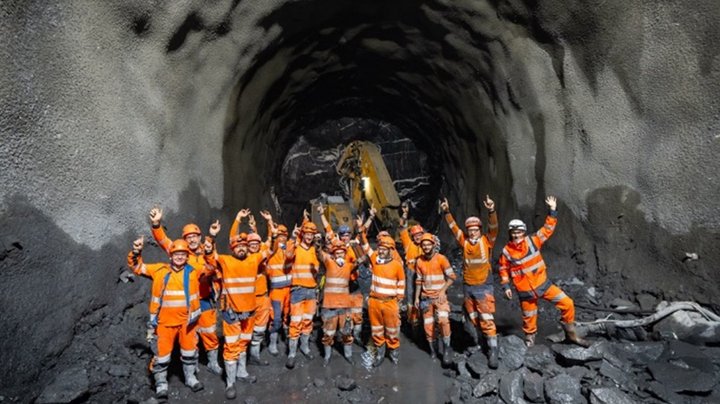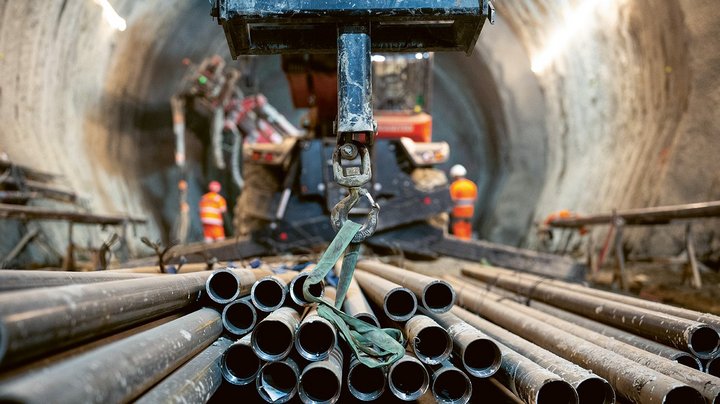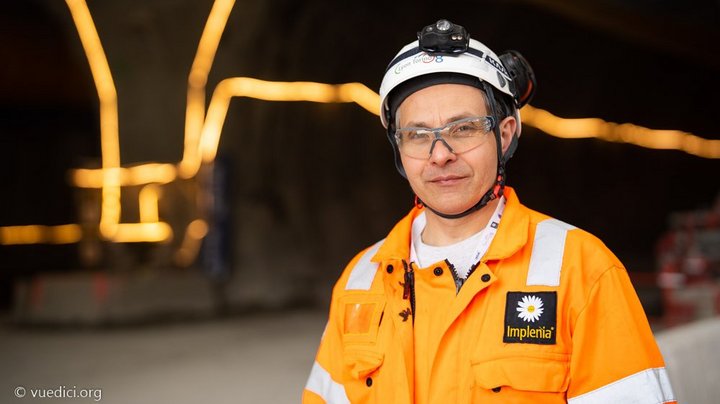
Three professions, one shared commitment
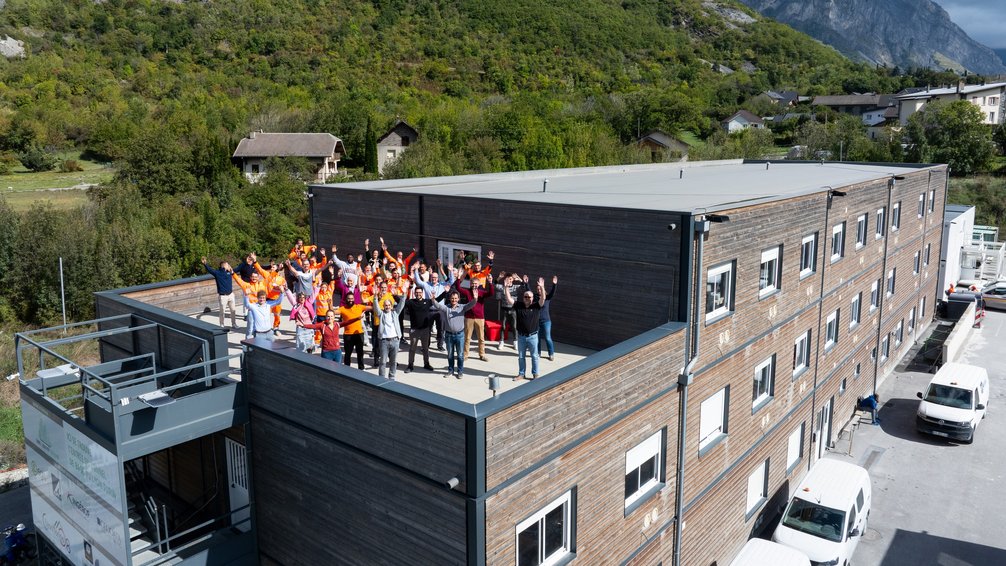
Conductor of the schedule
Trained as a land surveyor and topographer, Romain Mabit, now Planning Manager, was quickly drawn to the unique environments of tunnelling and underground works. During his studies, an opportunity in 2016 allowed him to travel to Hong Kong to train as a tunnel boring machine operator, before continuing on the Eole project in Paris in 2018.
Romain joined Implenia in 2020 on line 11 as a TBM shift supervisor. He then spent two years at GIE Alliance as Logistics Manager before joining, in October 2023, the Lyon–Turin CO08 site as Planning Manager.
“I wanted to work in a specific environment. What appealed to me was the atmosphere of underground works: highly technical, but also very close-knit,” says Romain.
Today, on a construction site such as CO08, priority is given to productivity and progress. This is where Romain comes in. As Planning Manager, he observes, listens to, and questions all departments – excavation, lining, surface works and design – in order to collect and cross-check the information needed to build a global and coherent view of the project.
“My role is to step back and see the bigger picture. I centralise information from each department and anticipate issues so that the project stays on track,” explains Romain.
He monitors progress using tools such as Microsoft Project, Primavera, Tilos, and even software enhanced with Artificial Intelligence to adjust the schedule in real time. Each month, he updates the overall schedule for the client’s representative and flags any potential scheduling impacts.
For him, the key to success lies in anticipation and teamwork. Every Thursday, he joins the department managers for a site visit: a key moment to analyse the current situation and propose solutions. His role goes beyond planning alone: he also analyses production performance and suggests adjustments to optimise the schedule.
“What I enjoy most is bringing teams together to solve a problem and seeing how everyone contributes to the overall success,” adds Romain.

Romain, Planning Manager, the conductor of the site schedule

José and Stéphane on site
The TELT-Project

The Lyon-Turin rail project is a high-speed line currently under construction. The main component of the project is the 57.5 km-long Mont-Cenis base tunnel, which forms a new rail link between Lyon and Turin. The total length of the new line is around 270.8 km, of which 140 km is in France and 46.7 km in Italy. The project is an important element of European rail infrastructure planning and is supported by the EU. It aims to speed up transit rail traffic in the east-west direction between France and Italy and is part of the TEN 6 rail axes between Lyon and Budapest.
Implenia is part of the TELT CO08 worksite, which includes the construction of the Mont-Cenis base tunnel. Implenia has been commissioned to build Lot 3 of the tunnel in 2021, together with partners NGE, Rizzani De Eccher and Itinera Spa. The project involves the construction of two 2,839 m-long tubes to Italy, including 11 safety branches and 140 m of cut-and-cover.
Key figures
| 5.6 km | Tunnel to be excavated |
| 1'018 m | in umbrella vaults |
| 1'078 | arches to be laid |
| 11 | Safety engines |
| 600'000 m3 | Earthworks |
| 2'700 m2 | acoustic hangar |
| over 127'000 m2 | construction site equipment |
| 5 years | Construction time |
| EUR 228 million | Order volume |
| Over 300 people | on site at peak times |