Passion for tunnel construction

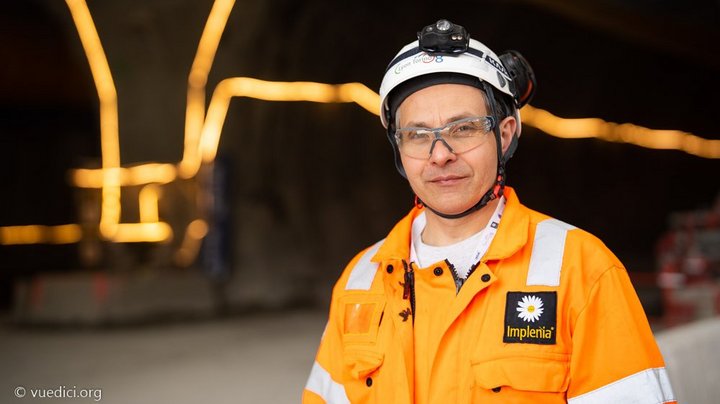
Yanis, how did you get into tunnel construction?
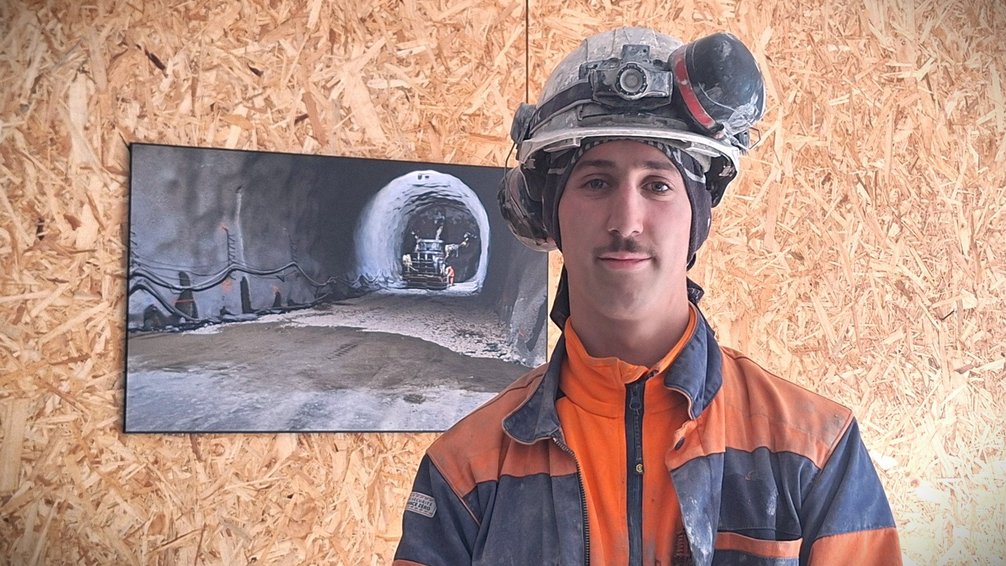
For me, tunnel construction is a family affair: my uncle and my brother have been working in this field for a long time. At first, I couldn't necessarily imagine working underground, but they got me interested in this profession. I started as a temporary employee and gained my first experience. I was then taken on by Implenia as a machine operator and now work as a concreter with the Normet Spraymec robot.
Can you describe a typical working day for us?
We work three shifts of eight hours each. So depending on the week, I can work at night, in the morning or in the afternoon. Each shift starts with a handover from the previous team: we discuss the progress of the work, give each other instructions and then descend into the tunnel with our personal protective equipment.
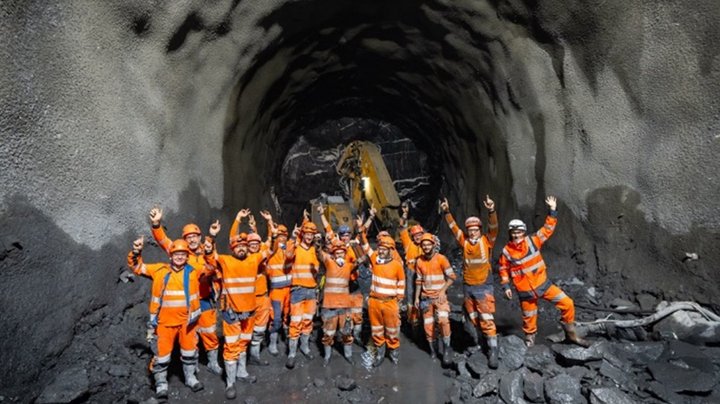
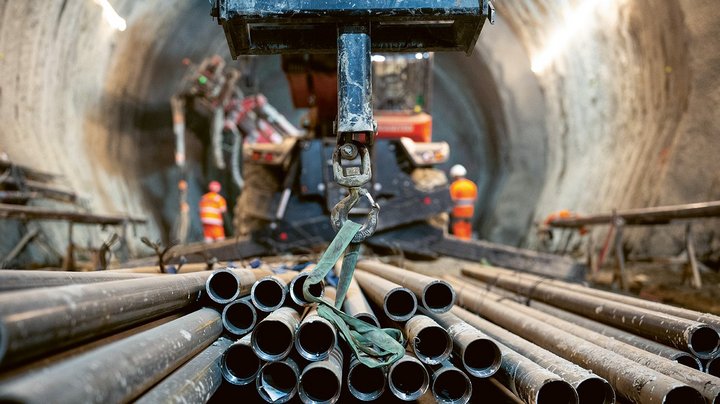
The individual tasks then follow: Drilling and loading explosives, blasting and securing, clearing out, rinsing and reprofiling, spraying concrete, setting anchor bolts.
It's a sequence of technical tasks in which you have to be efficient but also very alert. It is a physically demanding job that requires courage, attention and motivation.
You talk about vigilance. Have you ever experienced a particularly impressive situation?
Yes, during a concrete spraying operation, a large stone came loose from the wall. It bounced off the robot's arm. I reflexively swerved to the side - it hit me on the arm, but fortunately not hard. I've been even more careful since then. Incidents like this are a reminder that you should never let your guard down.
Which machines do you operate every day?
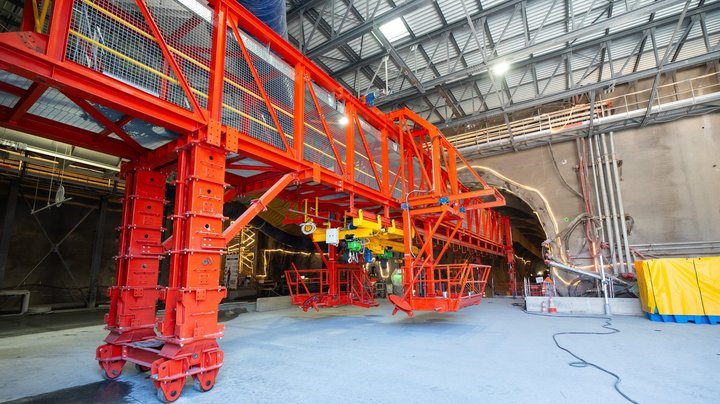
The spraying robot, of course, but also the gondola, the Manitou or the excavator. These are machines that require precision, experience and a lot of foresight.
And how is the atmosphere in the team?
There is real solidarity and good team spirit. You always work as a team in a tunnel. Communication and trust are essential to ensure that everything runs smoothly, both from a technical and human point of view.
How do you see your development opportunities in this profession?
I've learned a lot since I started. I've become more skilled and dexterous. And I'm still learning every day. In the short term, I would like to complete the training as a forklift driver, which I still need, and become even more independent in all stages of tunnel construction. I feel at home at Implenia and within the consortium. I would like to continue.
The TELT project

The Turin-Lyon railroad project is a high-speed line currently under construction. The centerpiece of this project is the 57.5 km long Mont-Cenis base tunnel, which forms a new railroad axis between Lyon and Turin. The entire new line covers around 270.8 km, 140 km of which are in France and 46.7 km in Italy. The project is an important part of European rail infrastructure planning and is supported by the EU. It is intended to speed up rail transit traffic in an east-west direction between France and Italy and is part of TEN rail axis no. 6 between Lyon and Budapest.
Implenia is part of the TELT project, which includes the construction of the Mont-Cenis Base Tunnel. Implenia has been commissioned to build Lot 3 of the tunnel in 2021, together with the consortium partners NGE, Rizzani De Eccher and Itinera Spa1. The project comprises the construction of two 2,839 m long tubes in the direction of Italy, including 11 safety cross-passages and 140 m of cut-and-cover tunnel.
Key figures
| 5.6 km | Tunnel to be excavated |
| 1'018 m | in umbrella vaults |
| 1'078 | arches to be laid |
| 11 | Safety engines |
| 600'000m3 | Earthworks |
| 2'700m2 | acoustic hangar |
| over 127'000m2 | construction site equipment |
| 5 years | Construction time |
| EUR 228 million | Order volume |
| Over 300 people | on site at peak times |