Into the tunnel with BIM
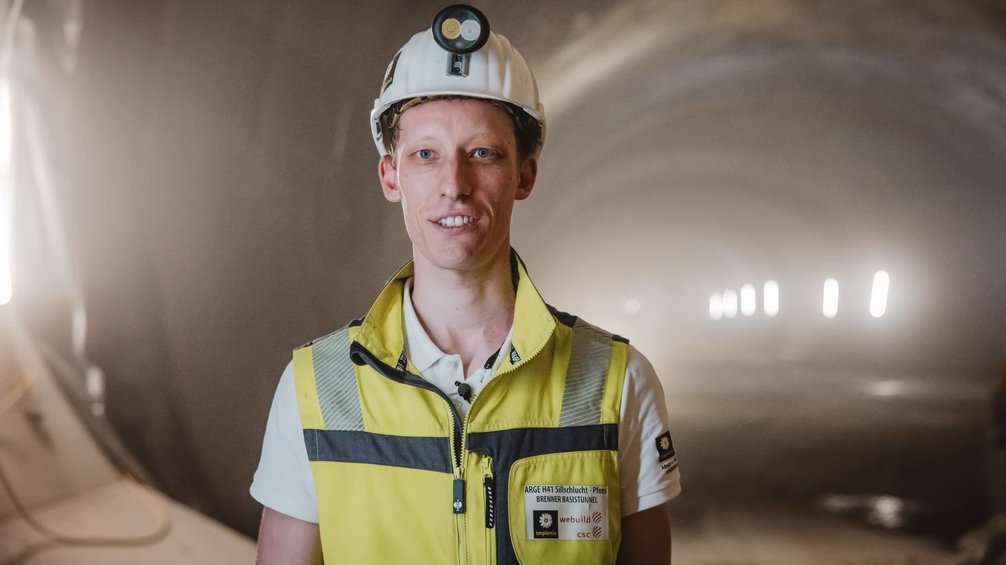
Hans, where does your enthusiasm for building come from?
When I was little, my parents rebuilt our house, then our neighbors rebuilt theirs. These construction sites were incredibly exciting for me – that has stayed with me.
How long have you been involved with tunnels?
Since my master's degree in civil engineering and specifically with my master's thesis on digital ground models. Then my supervisor was appointed Professor of Tunnel Information Modeling and I was given the opportunity to write a dissertation on the subject of digitalization.
How did you end up working on the Brenner Base Tunnel project?
As an intern, 50% of the time alongside my doctoral studies. It was a great first practical experience on this gigantic construction site.
How were you able to contribute your expertise?
I was able to analyse the potential for digitalization and then implement measures. The whole thing made us a showcase project in terms of digitalization. Our methods are now being used as standard solutions for new projects. That makes me a little proud.
Do you have a specific example of successful applications?
Yes, it's about data flow analyses, among other things: where does the different information come from, where is it needed, how can we optimize the data flow through to billing. The basis for this is the digital recording of data in the field using digital forms on the iPad. If this is done digitally, it saves a lot of work – with consistent quality.
What are you doing now in your first job after graduating?
After finishing my job at the university, I was able to start directly as a shift supervisor in tunnel driving. I work very operationally: daily shift handovers with the foremen, a lot of communication with the team in the tunnel.
Your highlights in this position?
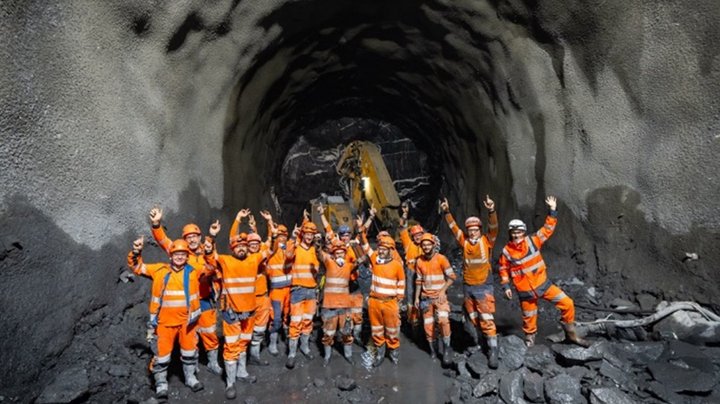
The tunnel breakthroughs in August and October 2025 with the tunnel boring machine and the second breakthrough of the main tunnel, which was excavated by blasting, in May 2025. We are now dismantling the 160 m long machine and blasting the cross-passages between the two tunnel tubes.
What's next for you and Implenia?
First we'll complete the Brenner project. I still drive into this tunnel every time with a smile on my face because the structure simply fascinates me. Apart from that, Implenia certainly offers many opportunities. I've just completed my internal training as a lean expert and I'm looking forward to many more exciting experiences and projects.


The Brenner Base Tunnel project

The Brenner Base Tunnel is a flat rail tunnel that connects Italy and Austria. It runs between Innsbruck and Franzensfeste over a length of 55 km and, including the connection from the "Inntal Tunnel", will form the longest underground rail link in the world with a total of 64 tunnel kilometers.