Building in icy conditions: protection for people, materials and machines
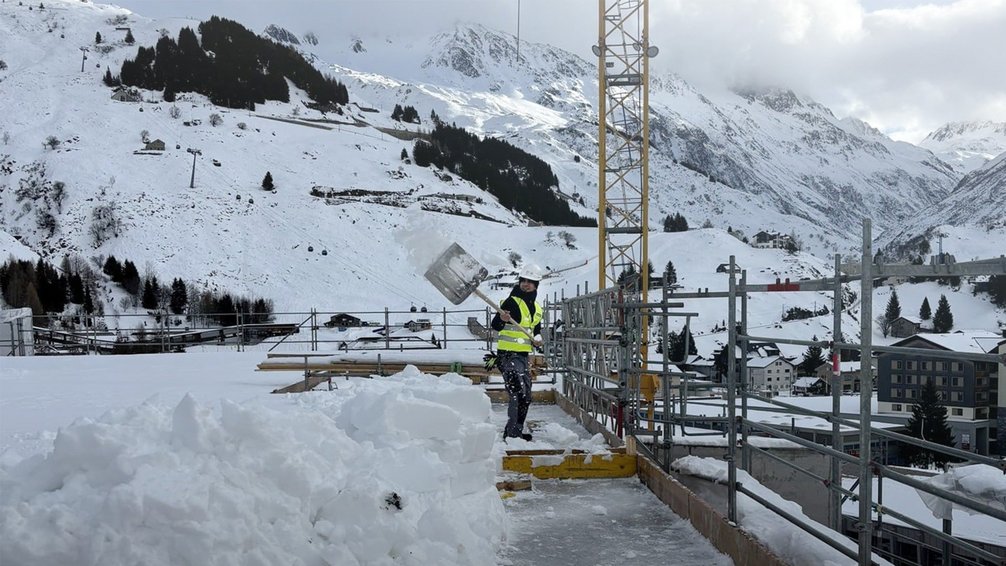
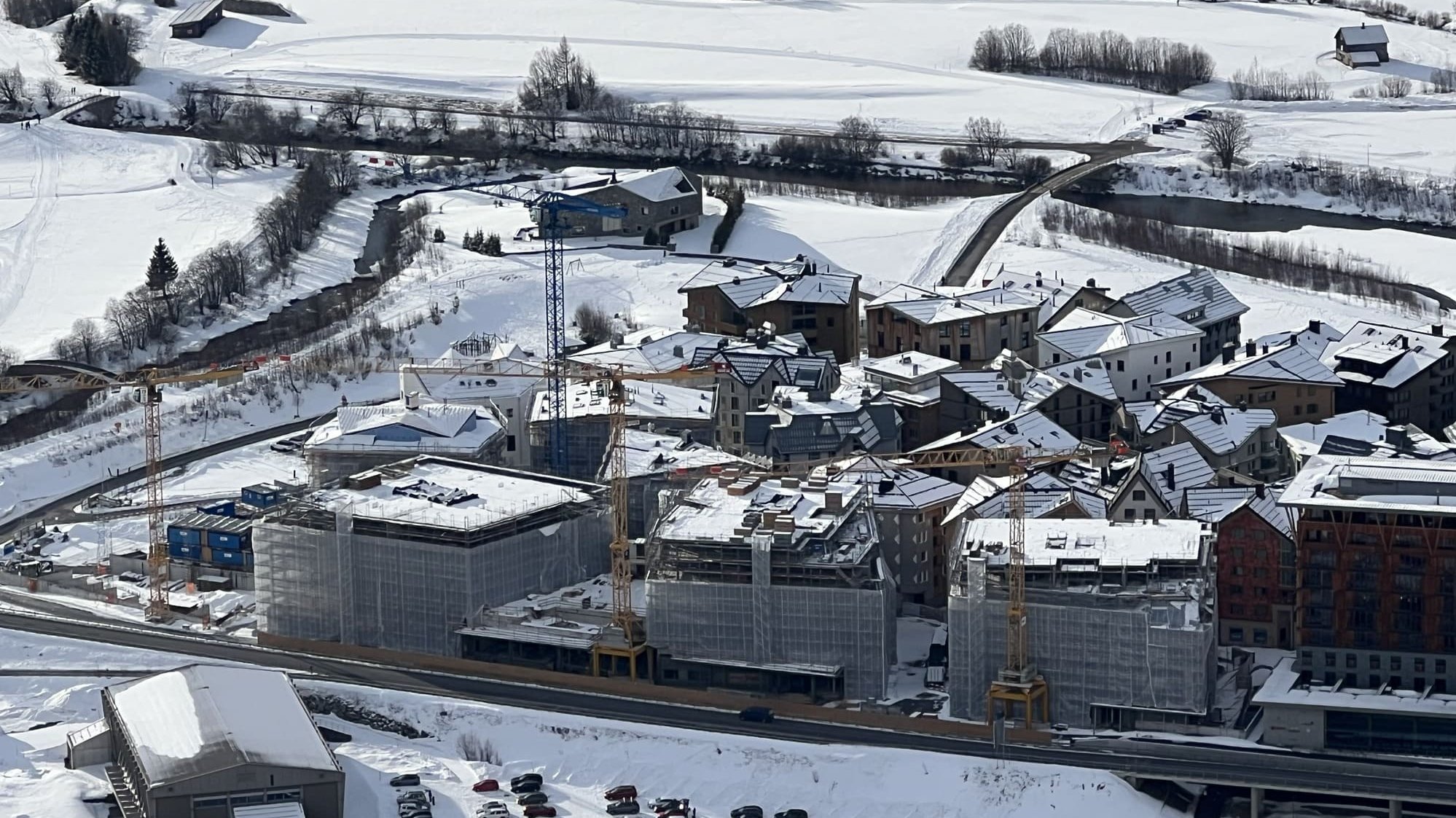
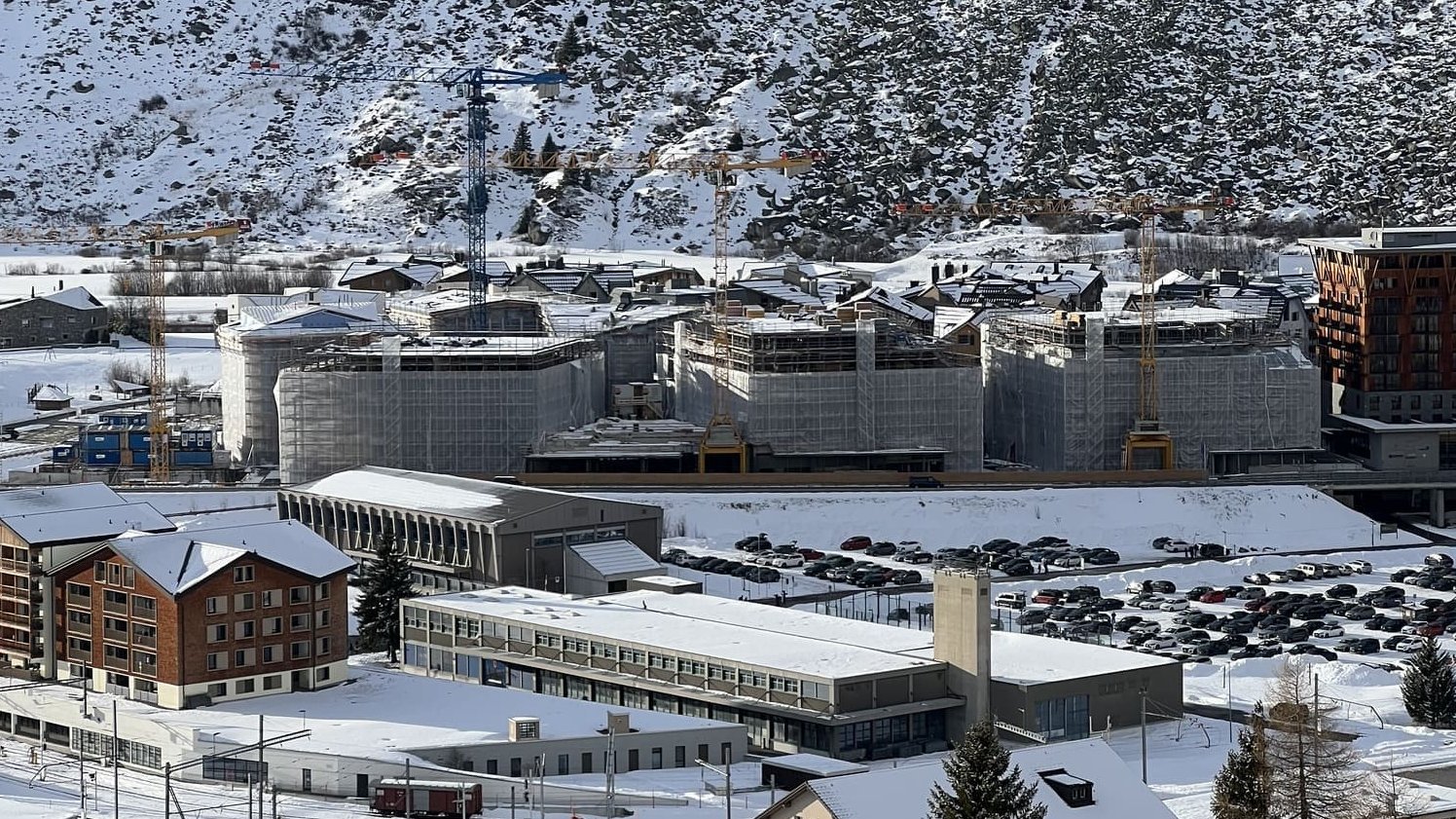
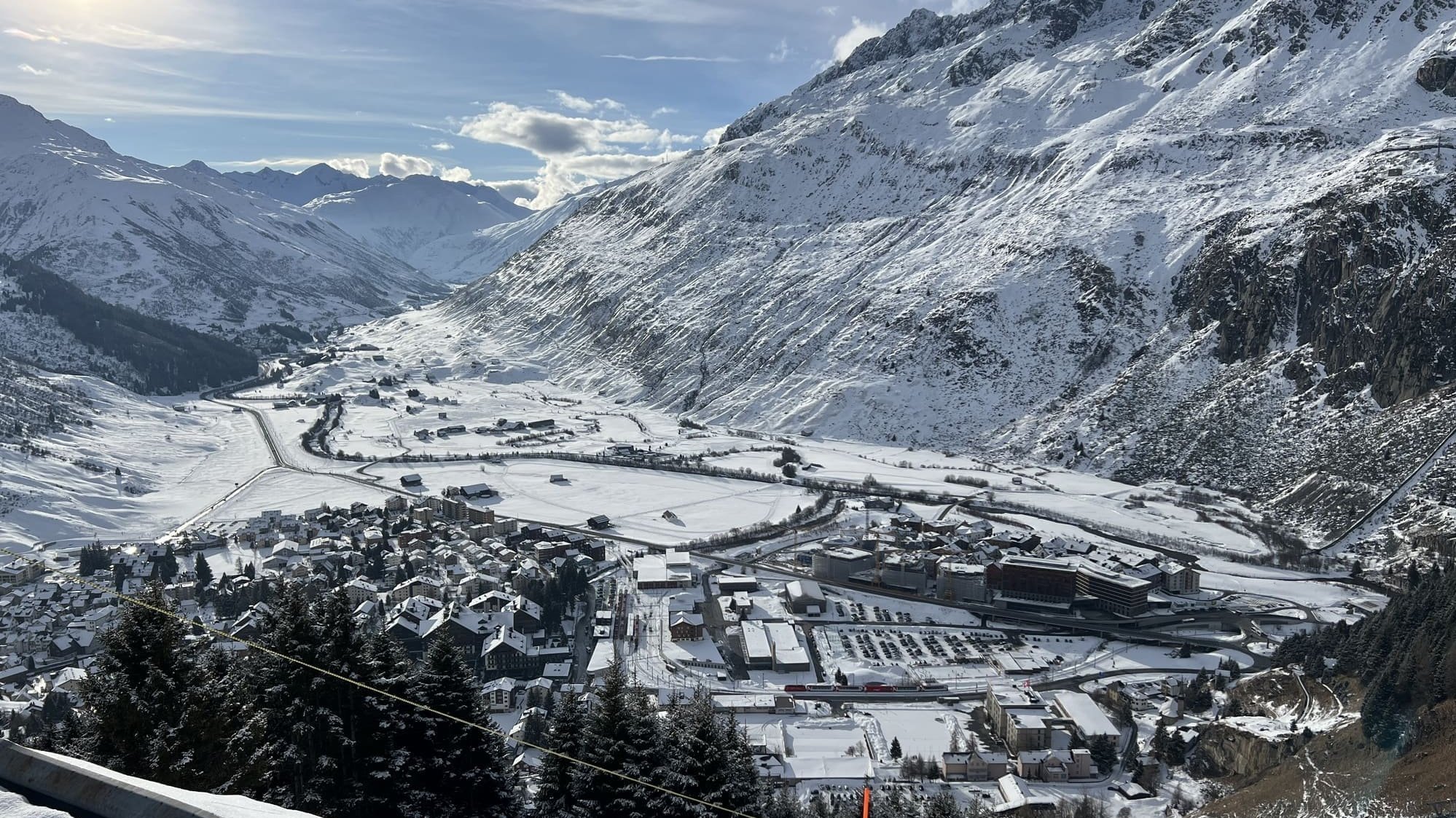
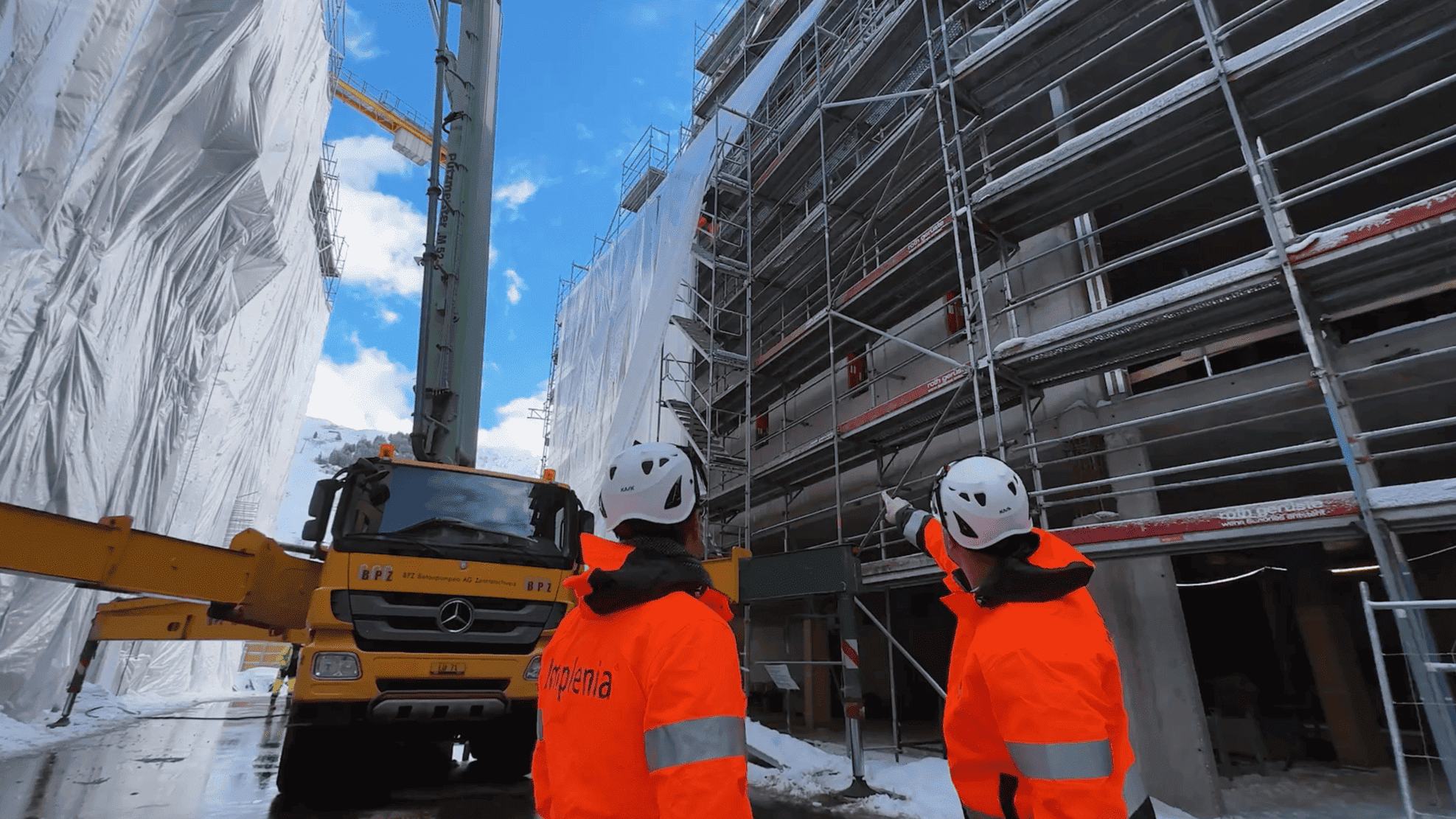
In the picturesque tourist resort of Andermatt, located at the northern foot of the famous Gemsstock in the Central Swiss Alps, "The Alpinist Andermatt" is a new top hotel with residences. Implenia is realizing the new building as total contractor for Andermatt Swiss Alps AG. At the end of last year, the building shell was raised to the sixth floor on schedule, with two more floors to follow by spring. Work continues even in snow and sub-zero temperatures. Up here, the average daily temperature in January is -9 degrees; this year it has already been -20 degrees.
"Building in winter at 1,450 meters above sea level is an adventure."
Andreas Gruber, project manager
"Building in winter at these high altitudes is always an adventure," explains project manager Andreas Gruber. This makes forward-looking planning and consideration of the three Ms all the more important: "We always think in three blocks: People, materials and machines. All three are sensitive to the cold - and we have to protect all three if we want to build safely and to a high standard."
M for man: Measures against the cold and the risk of slipping
Low temperatures, wet conditions and icy surfaces require clear protection concepts for employees. These range from suitable clothing and options for warming up to securing walking and working routes.
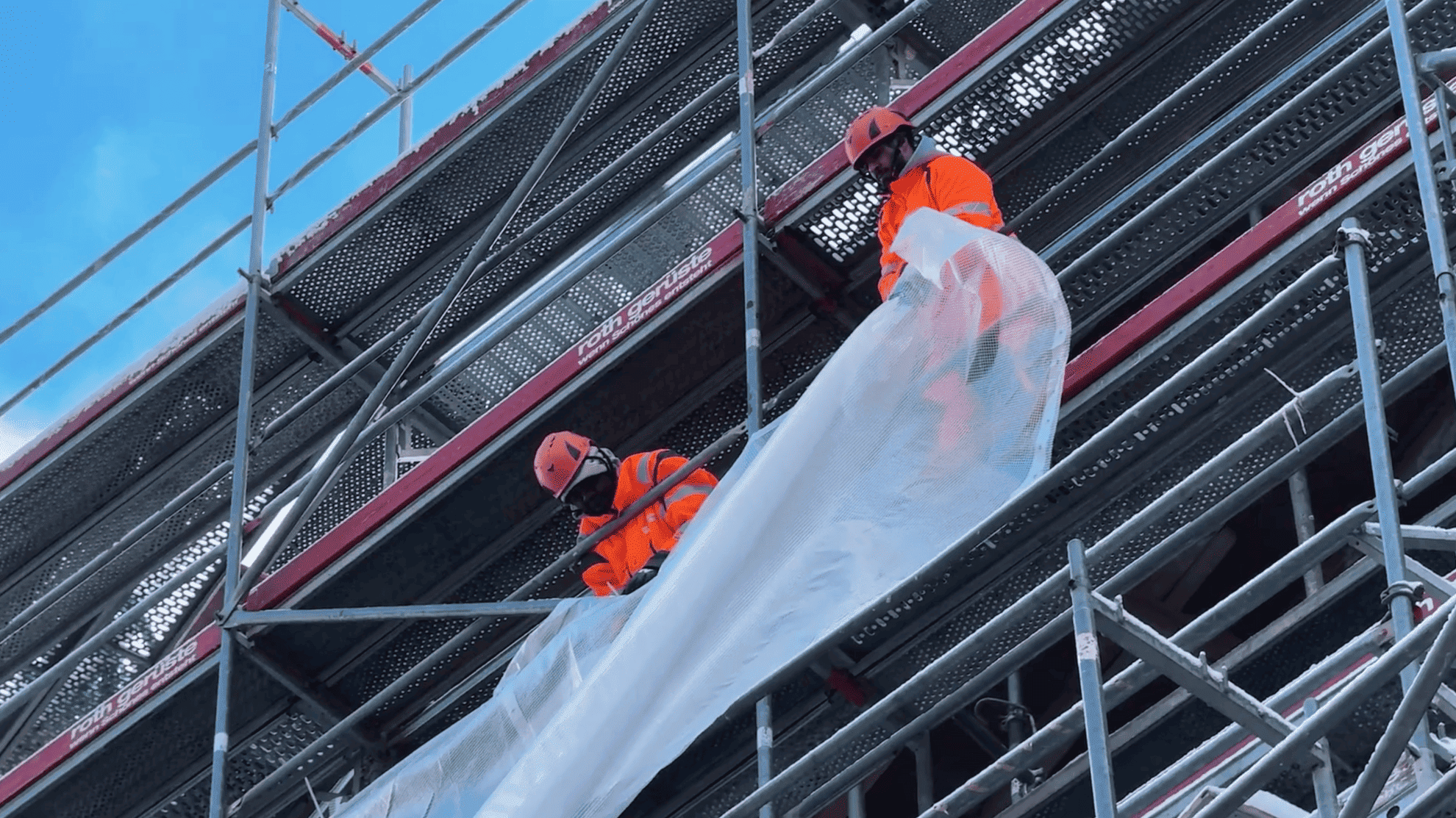
Protective clothing: The protection of employees is our top priority. This is based on the guidelines and recommendations of SUVA. "It is essential for employees to wear protective equipment that protects them from the cold and wet - even from plus three degrees," explains project manager Andreas Gruber. The skin, especially on fingers, toes, ears and nose, must be protected from frostbite. At the same time, mobility must not be restricted. If you work with clammy fingers or stiff joints, you lose precision and responsiveness - a risk on any construction site. There is also an often underestimated factor: physical work generates heat. Employees start to sweat, clothing becomes damp and cools down quickly in the cold. It must therefore be possible to change wet layers.
Stations for warming up: Heated rooms are available on the construction site in Andermatt for this purpose. Warm-up stations are also planned, where employees can warm up briefly with a hot cup of tea. The location is important here: "Together with the client and the subcontractors, we are looking for solutions to ensure that these places are easily accessible for everyone, do not cause any unnecessary loss of time and take into account all requirements, such as ensuring that food stored there does not attract wild animals." Especially on a large construction site, this is always a planning challenge and requires coordination between the partners involved.
Safe routes: In addition to the cold, the risk of slipping is also a key issue. Walkways must be kept permanently free of ice. The obvious solution - spreading salt - is not suitable for concrete surfaces. "The salt penetrates the concrete pores and can attack the reinforcement," explains the project manager. That's why the team relies on covers and foils: "This prevents ice from forming in the first place or the concrete from coming into contact with de-icing agents."
M for material: Concreting at low temperatures
Concrete is a critical material - it reacts sensitively to the cold. "At a concrete temperature close to freezing point, strength development practically comes to a standstill," explains Andreas Gruber. His team prevents this with various measures that are taken depending on the temperature. "As a first measure, we preheat the aggregates, i.e. the aggregates, and then install the warm concrete mix." The second measure is to incorporate antifreeze and the third is to increase the cement content or adjust the concrete mix design. Finally, the freshly concreted components are wrapped and, if necessary, tempered with fan heaters.
"For high temperatures and bulky components, ice cubes are added to the concrete; for low temperatures, the aggregates are preheated."
Andreas Gruber, project manager
However, it is important to bear in mind that exposed concrete reacts visually to different installation temperatures: Color and surface effect can vary. "That's why we create external exposed concrete surfaces in the same temperature range wherever possible." The team in Andermatt also has to adjust the stripping times. In cold weather, the concrete stays in the formwork for longer. At between -5 and -10 degrees, additional measurements are necessary to document the strength. And concreting stops below -10 degrees.
The construction process is therefore always planned and adapted in coordination with the weather forecast. Weather-related interruption days are factored into the construction program. Heavy snowfall is also problematic. "We're talking about a meter of snowfall within an hour or more." Then imagine: The formwork is in place and before the concrete arrives, the reinforced volume fills with snow instead of concrete. "In practice, this means stopping in good time, covering it and clearing it manually if necessary. In short: shoveling instead of building. Earlier attempts to melt the snow with steam are not a good recommendation. As the water vapor was carried outside, the scaffolding iced up."
Building in the high mountains: "The Alpinist" in Andermatt

Implenia has been building "The Alpinist" in Andermatt since March 2025. The 5-star lifestyle and sports hotel will house 164 residences, 66 hotel rooms, indoor and outdoor spa, sports center, restaurants, bars, co-working and parking. Completion is planned for November 2027.
MORE about the PROJECT
M for machines - operation and safety in cold conditions
In addition to the protection of employees and the correct use of materials, the reliable operation of equipment and machinery also plays a key role in winter operations. Low temperatures affect the performance, material properties and operational safety of technical systems.
Protect equipment and machines: Machines react sensitively to low temperatures. Batteries, for example, lose a significant amount of power at sub-zero temperatures, slowing down battery-powered devices. The solution is to store batteries in warm areas and only use them shortly before use. But other devices also suffer from the cold. "Lubricants change their viscosity at low temperatures, so liquid-cooled machines have to be tempered," emphasizes the civil engineer. Certain machines such as compressors and concrete pumps are therefore enclosed if necessary, while at the same time ensuring that they do not overheat.
Camera monitors snow on the crane: Cranes also pose a particular challenge in cold winter weather. Snow and ice can accumulate on the boom and fall down in thawing weather or wind. This is also dangerous beyond the construction site area, as the national road is within the slewing range of the crane jib. As a measure, the jib is permanently monitored by camera. As soon as ice forms, the area is cordoned off and the crane manufacturer's specialist personnel remove the snow and ice manually. In extreme cases, the jib would even have to be dismantled, which would have a considerable impact on the construction process.
Continue building safely
Despite the wintry conditions, work is progressing well. Walls are currently being concreted and wooden elements are being installed on the façade. And thanks to the 200 kW construction heating system that has now been put into operation and the temporary closure of the shell openings, the drywall and interior work can also begin. At the same time, the building services are being installed within the riser zones. "Sealing work, which requires minimum temperatures for bonding, is particularly critical in terms of the cold," says the project manager. The sometimes high wind speeds also affect the construction process: If the wind is too strong, installation work on the façade has to be interrupted. In addition, there is the consideration of persistent snowfall. "We have to weigh up whether snow clearing is still efficient - or whether we have to temporarily give in to the weather."
In the end, building in the high winter in the Alps is always a balancing act of engineering knowledge, experience and pragmatism. "If you plan ahead and work closely with everyone involved, you can continue building safely and efficiently even in snow and in defined temperature ranges," summarizes project manager Andreas Gruber.